Fosi Audio ZA3/ZD3

 Even if you have only a casual acquaintance with YouTube’s burgeoning cheap audio debating society, you may have found yourself dodging military-grade click bait proclamations from the surreal land of dinky, game-changing giant killers where palm-sized Class D amplifiers and DACs from the Far East costing just a few hundred quid have led some who’ve experienced their charms to question the assumed sonic superiority of big beast, multi-thousand-pound exotica.
It sounds like the sort of thing any sane audiophile would file under ‘yeah, right’ but, seeming to defy instinct and reason, the idea that pukka, big-buck, high-end sound quality really can be had for the cost of a fancy air fryer does aptly seem to be generating some heat – a promise that seems both too good to be true yet too intriguing to ignore.
Currently basking in the online spotlight, Chinese brand Fosi Audio is creating quite the buzz with its £150 ZA3 amp, a more stylish and sophisticated take on its older V3 series stereo and mono amps, combining switchable stereo and mono modes in one design rather than the V3’s separate dedicated units. Then there’s the partnering £180 ZD3 preamp/DAC with its matching orange-knobbed, dark grey, aluminium chassis aesthetic plus crisp OLED portal display. On showroom appeal alone, the stackable units are significantly better looking and finished than most of their kindred Amazon-available rivals to date.
But that’s just the side show. Tugging shamelessly on audiophile sensibilities, both are tweakable through op-amp upgrades and boast impressive on-paper stats, balanced inputs as well as useful configurability – the ZA3 from integrated stereo to still more muscular monobloc, the ZD3 from preamp/DAC to pure DAC. The obvious upshot used together is that, if you don’t need the extra inputs and don’t mind getting up to adjust the volume, you can use the ZD3 in ‘bypass’ mode as a plain DAC. Alternatively, whack the ZA3’s volume round to max and you can use it as a power amp serving the ZD3’s preamp functionality, including the luxury of a basic remote to adjust volume and select inputs. More on this later. Even if this combo sounds no better than merely good, there’d scarcely be anything to complain about for around £300 with a quick online purchasing search.
Chiming with Fosi Audio’s performance-for-peanuts ethos, though, the units aim somewhat higher than merely good. Their on-paper specs are certainly aspirational, likewise the quality of components that deliver them. The ZA3 amp is built around Texas Instruments’ well-regarded TPA3255 Class D amp module, claimed to be capable of a continuous 300W per channel into 4ohm. But, for the ZA3, it’s meant to have been scaled back for a better signal-to-noise ratio and is otherwise limited by the capacity of the power supply. Although the ZA3 can be bought for a modest saving with a 32V 5A power adapter, Fosi offers the no-brainer option of a 48V 5A brick (as supplied), which unlocks the claimed 155W into 4ohm in stereo – a little over 100W into 8ohm. Ample for most applications you’d imagine. As we don’t have a second ZA3 to try a pair as monoblocs, the alleged 235 mono Watts into 4ohm, while intriguing, is academic.
Of course, sound quality relies on more than raw power and, again, the ZA3 dresses its circuit board to impress with top-drawer capacitors from NCC, ELNA and WIMA plus premium inductors from Sumida. Such attention to detail is backed up by the claimed signal-to-noise-and-distortion ratio (SINAD) of 89dB with a quote of 106dB for signal-to-noise alone, the same value for dynamic range and a claimed total harmonic distortion (THD) of 0.006 percent. And it isn’t only valve amp owners that get all the ‘rolling’ fun. The five stock DIP8 dual op-amps the ZA3 comes with can be swapped for more expensive alternatives from the likes of Sparkos or Burson, potentially sweetening sonics further. For another day, maybe... There are effectively two inputs, one balanced (XLR) and one single-ended (RCA) and good-quality speaker terminals though, given the amp’s compact size, they are rather close together.
You get the Fosi design drift. The fully balanced ZD3 preamp/DAC also allows users to roll op-amps and invites detailed scrutiny of measured specs. Thanks to the known high quality of the chipsets employed – including an XMOS XU316 processor and fourth-generation, ultra-low noise and distortion ESS Sabre ES9039Q2M DAC chip for which DSD512 and PCM 32-bit/768kHz sampling rates are givens. Connectivity supports Bluetooth aptX HD, USB, optical, coaxial, HDMI Arc and, mirroring the ZA3, balanced XLR and single-ended RCA outputs. The circular 38mm OLED display might be small, but it’s crisp and clear, and remarkably easy to read at a distance. Finally, like the ZA3, the 12V trigger socket allows synchronised power on/off with other devices.
Sound quality
To begin, we use the ZD3 as a pure DAC connected to the ZA3 amp via the balanced XLR inputs. This, we figure, will give the best sound quality. With an eye on a real-world system price, the amp is hooked up to a pair of Klipsch R-60M standmounts (£425, HFC 525) and fed by a Primare NP5 Prisma Mk2 streaming transport (£550, HFC 494). But there’s a problem. The R-60M is 93dB efficient and the ZA3’s gain very much on the front foot. Playing loud to very loud isn’t an option, but a necessity because at more comfortable listening levels with the volume knob only just off the starting line, the channel balance becomes lop sided favouring the right-hand speaker. Not ideal – at least not if you have very sensitive speakers.
Bringing the ZD3’s preamp functionality into play is the obvious fix. Now there’s a greater choice of inputs, a remote control, perfectly graduated and even channel balance all the way down to silence. And finally, an appreciation of what all the frenzied internet chatter is about. Team Fosi does clear, controlled, clean-as-a-whistle ‘hi-fi’ like a dream with on-point transparency, resolution, grip and dynamic expression all comfortably within its compass.
I play a Tidal stream of the access-all-sonic-areas Work S**t Out by Dirty Loops. The Fosi duo keys right into the breakneck tempo and groove with an icy precision that immediately sounds classy and expensive. Bass, usually a Class D strength, is excellent – deep, taut, agile and articulate with good weight, pitch and texture. Midband insight is just as compelling, tonally perhaps a little cool, but so open and explicitly detailed you don’t feel you’re missing out on anything in the mix.
It’s all good, but a word of caution: this up-front style of presentation tends to flatten depth perception, particularly with dense, complex productions, landing music in your lap rather than layered tiers ghosting through the front wall behind the speakers. Lateral soundstage perspectives, conversely, usually remain splendidly spacious and the images therein always tightly formed.
Conclusion
While Fosi’s nailing of fundamental hi-fi metrics at a rock-bottom price deserves high praise, the true hallmarks of high-end are also deeply rooted in exceptional levels of refinement, nuance and subtlety, especially with high frequencies and here there’s a little trouble – no reticence or lack of definition, but the treble can sometimes sound slightly grey and uninteresting, starved of harmonic richness and glow. That said, if this Fosi pairing isn’t quite the high-end hack of hi-fi dreams, it doesn’t miss by that much and, for the money, is a stone-cold steal. DV
DETAILS
Product: Fosi Audio ZA3/ZD3
Type: Integrated amplifier/preamp-DAC
FEATURES
● Quoted power output: 2x 155W (4ohm)
● Inputs: balanced XLR; RCA/USB; optical; coaxial; HDMI Arc; Bluetooth aptX HD
● Outputs: balanced XLR; RCA
Read the full review in Issue 526
 | ||||

|
|
|||
























 |
Inside this month's issue:
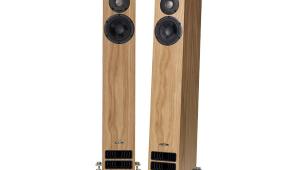
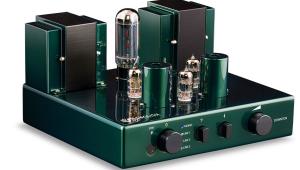
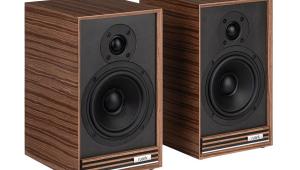
Ruark R610 music system and Sabre-R standmount speakers, PMC twenty.23i Active, floorstanders, English Acoustics Downton preamplifier, Bluesound NODE ICON preamp/streamer, Ortofon Concorde Music Blue MM cartridge and much, much more
|







| Equipment Reviews | |
Features | |
Latest News Awards Newsletters | |
Resources | |
Subscriptions |
WHERE TECHNOLOGY BECOMES ENTERTAINMENT
 © 2026 Hi-Fi Choice
AVTech Media Ltd
All rights reserved