NAD C 3030
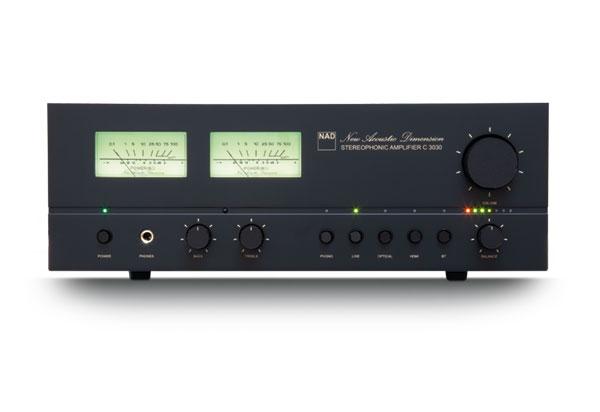
 Drawing inspiration from the past is no new thing. Hi-fi manufacturers love to bring out special edition products with retro styling on the outside and bang-up-to-date mechanics on the inside. NAD got to this party quite early and now the new C 3030 takes this formula and runs with it.
At first sight it’s a close visual copy of its mid-Seventies namesake, but the closer you look the more you see the differences. NAD’s Global Product Manager, Morten Nielsen, talks in terms of his company creating: “a parallel range that draws more directly on our visual and emotional heritage”. He adds that NAD’s new lineup is targeted at: “more intentional listening,” and stresses the company will continue to develop modern-looking products across the Classic and Masters Series.
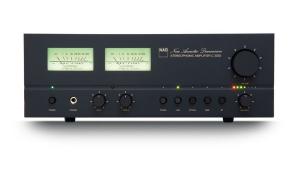
Stylistically, the original 3030 was the last of NAD’s first-generation of integrated amps. It wasn’t full-width, but nor was it ‘slimline’ like the subsequent 3020. The C 3030 follows this blueprint faithfully, but look closer and you’ll see the original’s filters and tape monitors are gone, and modern input options like Bluetooth are added.
Under the hood, things are very different. The original sported a claimed 30W (8ohm) of Class AB power, whereas the new C 3030 is a modern Class D design with 50W RMS per side into 8ohm, from NAD’s HybridDigital UcD platform. This is based on the popular Universal Class D amplifier module of Hypex descent, which has been refined over the years.
Look around the back and you’ll see inputs for HDMI eARC and optical, plus analogue line-in and MM phono. In addition to the aptX HD Bluetooth wireless antenna, there’s a subwoofer out with switchable 80Hz hi-pass filter. A Texas Instruments PCM5242 differential DAC is fitted, chosen because it’s a well-known quantity, says Morten. Apparently there have been: “continuous improvements to the surrounding system architecture, including the preamplifier section, power supply design, DAC implementation, grounding and overall signal handling.”
The amp looks lovely, arguably better than the original upon which it is based – thanks to the superb Dark Grey paint finish and cleaner looking, better lit meters. Thanks to its old-school analogue switchgear (ie, buttons and knobs) and lack of display, the unit proves a pleasure to use. The action of the volume control is very smooth and is supplemented by a row of LEDs giving handy visual indication of what the level is.
For the purposes of this review, the NAD is paired up to Rega Planar 6 turntable with Audio-Technica AT-VM95E cart (HFC 466 and 444 respectively), Cyrus CD Xt transport and Chord Qutest DAC (HFC 436), driving Acoustic Energy AE1 40 and Neat Majistra speakers (HFC 501).
Sound quality
If you’ve ever heard the original 3030, you won’t find the new version too dissimilar. It certainly shares the NAD family sound. Yet whereas the original was fat, rich and opulent – and a tad misty and vague – this new design is merely warm sounding with a good deal more clarity, detail and grip.
Spin up the classic rock of Al Stewart’s Year Of The Cat, via the RCA line input, and the opening piano part sounds well resolved and solid, yet with little sense of added saccharine. Tonally it’s less sepia-tinted than the original, meaning there’s better definition to piano harmonics and cymbals are more lustrous. The powerful bass guitar sounds more rounded than via Rega’s Brio 7. Yet still things are enjoyably bouncy, with that characteristically generous NAD bottom end. The lead vocal is carried well, with an intimate quality that’s locked strongly to the centre of the spacious soundstage. Percussion is deftly handled and there’s a good sense of rhythmic flow to proceedings. The result is a pleasing rendition of this song, albeit one that’s not as plush as the classic 3030.
This continues with the punkier strains of So It Goes by Nick Lowe. The C 3030 locks onto the angsty feel of Lowe’s vocals, while telling you all about the cranked-up lead guitar and powerful bassline behind. Despite the track’s forward balance, the NAD never sounds harsh or unstable and grips the undulating bassline and shuffling beats. Compared with amps at several times its price, the C 3030 lacks some definition in the midband, and there’s a slight softening of bite in the treble and grip in the bass. There’s little sense of it running out of puff at high levels and it doesn’t lose the plot on dynamic peaks as some lower powered amps can.
Pipe the digits in directly via the optical digital input from a CD transport and the C 3030’s internal DAC loses a little of my reference Chord DAC’s bass weight, but sounds no less fun. Goldie’s Timeless really jumps up and grabs you with its super-wide soundstage and decent depth. The swirling synthesiser is resolved accurately without adding any unwanted edge, while the female vocal line is powerful and expressive.
The innate spaciousness makes Beethoven’s Pastorale Symphony a satisfying listen. Its soundstage is impressively expansive from left to right and falls back further than many rivals. NAD’s trademark smooth, powerful and confident sound is evident as it delivers an upbeat, melodic rendition, deftly capturing the way the music ebbs and flows without sounding aggressive.
The phono stage is surprisingly good considering the modest price. Spinning Julie Tzuke’s Welcome To The Cruise showcases its musically pleasing nature and general gutsiness in the bass. So many cheaper amps fall down on this, yet the C 3030 rewards playing vinyl. Likewise, the Bluetooth input isn’t bad either. I’ve heard way worse renditions of Dubstar’s Nineties pop epic Not So Manic Now streamed direct from my phone. Indeed across all sources, the NAD is refined yet animated and enjoyable. Ditto the headphone output, which is very listenable when powering my Sennheiser HD 650 cans. The classic Britfunk of Light of the World’s Time is most enjoyable, the C 3030 carrying its choppy rhythms and scratchy guitars convincingly.
Conclusion
This new NAD amplifier is an interesting purchasing proposition. It is not – out and out – the finest-sounding design at its price point, yet it’s probably the best all-round package. Obviously many audiophiles will love the retro styling, but this isn’t a gimmick because the user interface is excellent. With no messing around with touchscreens and menus, you can get whatever you want done with it instantly.
There are enough inputs for modern audiophiles, although a coaxial input would have been nice. Its phono stage and Bluetooth features are well implemented and its audio engineering delivers a smooth and engaging sound that’s hard to fault at the price. All this means the C 3030 makes a great case for itself to budget-conscious buyers. Rather than being just a gimmick, its retro styling really adds to the overall experience. NT
DETAILS
Product: NAD C 3030
Type: Integrated amplifier
FEATURES
● Quoted power output: 2x 50W RMS (8ohm)
● HybridDigital UcD Class D amplification
● Inputs: RCA; optical; HDMI eARC; MM phono stage
Read the full review in Issue 540

















 |
Inside this month's issue:
Ruark R610 music system and Sabre-R standmount speakers, PMC twenty.23i Active, floorstanders, English Acoustics Downton preamplifier, Bluesound NODE ICON preamp/streamer, Ortofon Concorde Music Blue MM cartridge and much, much more
|







| Equipment Reviews |  |
Features | |
Latest News Awards Newsletters | |
Resources | |
Subscriptions |
WHERE TECHNOLOGY BECOMES ENTERTAINMENT
 © 2026 Hi-Fi Choice
AVTech Media Ltd
All rights reserved