Wharfedale Super Linton
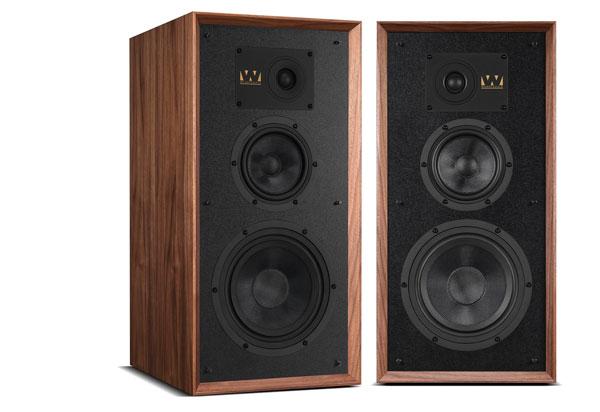
 At the time of the acquisition of Wharfedale by China-based IAG, there was much gnashing of teeth over the chances of the new owners disregarding a company heritage dating back to 1932. Mind you, similar worries were expressed when the same outfit snapped up Castle, Quad and Leak, and more recently Mission, then Audiolab…
The worries have of course proved unfounded; not only has IAG breathed new life into its brands, it’s also proved sensitive to all that history. It still makes the latest versions of Quad’s classic electrostatic speakers, has developed Audiolab with the likes of the latest 9000 series and – as of two years ago – is back making selected speaker models in the UK, having built a new production space, complete with anechoic chamber, at its HQ in Huntingdon, Cambridgeshire.
It’s also been mining its heritage, recreating and refining some classic designs of the past. The Quad 33/303 (HFC 524) pre/power amplifier is an obvious example, but speakers haven’t been forgotten, with revivals of the likes of Wharfedale’s Denton, Dovedale and Linton models, and Mission’s 700 series.
The speaker we have here is a sort of double revival; the Super Linton, yours for £2,000 complete with matching stands (which double as LP storage for that full retro look), is an upgrade of the Linton Heritage launched in 2019 – itself a re-engineering of a design first sold in 1965 and in the Wharfedale catalogue until the early Eighties.
You can buy the Super Linton without the stands and save £150, though I’m not sure why you’d bother. The ‘big bookshelf’ proportions of the speaker makes it tricky to find a suitable alternative stand. Oh, and the original 2019-spec Linton is still available, at £1,250 with stands or £1,100 without. Change your mind and want the stands later, and you’ll pay £350 per pair.
Go down the Super Linton route and you end up with a speaker with a decidedly Seventies look – not least in the fact it’s a three-way design rather than the modern two-way standmount norm. It’s also finished in a range of wood veneers that add to the retro vibe. You can choose from Walnut, Mahogany or Black Oak, all hand-matched and lacquered to a satin finish. The supplied grilles sit in a recess on the front of the speaker, so are flush with the lip of the side and top panels. Your dad – or possibly grandfather – would recognise these, and would probably say: “Ah yes, now these are proper speakers…”
The latest iteration of the Linton design may share the Sixties look of the original, which was by Robert Gutmann of the British Design Council, but it features significant upgrades from the 2019 Linton Heritage model and has nothing much in common with the first Super Linton, launched in 1967. A 25mm soft-dome tweeter is partnered with a 135mm midrange driver and 200mm bass driver, these two both using a woven Kevlar cone, with the crossover points set at 2.5kHz midrange to tweeter and 550Hz bass driver to mid.
All the drivers are new, the bass unit having an enhanced motor system and the tweeter a new ceramic magnet motor derived from the range-topping Dovedale. It’s set in a short horn and front plate to smooth out the integration with the midrange and control high-frequency dispersion, while the mid driver is set in a tubular sub-enclosure within the cabinet, damped with long-fibre material to cancel out any rearward energy for a clearer rendition of vocals and instruments. The bass, meanwhile, is tuned using twin rear-venting ports, exiting just above the single-wire terminals while the larger cabinet, some 40mm taller than that of the 2019 Linton Heritage model, further improves bass output.
Although this is a single-wire speaker, the crossover is split between the mid/treble section and bass, the two parts physically separated to avoid electromagnetic interference between them, while even the grille is improved with better internal shaping optimising the integration between the drivers.
Sound quality
With a quoted 90dB/W/m sensitivity, a pretty stable 6ohm impedance and 25-200W recommended power handling, this is hardly a demanding speaker. It works well with IAG’s Audiolab amps or indeed the re-imagined Quad 33/303 combo and proves a fine match with the Cambridge Audio CXA81 MkII and Naim Supernait 3 (HFC 456) I have to hand. But if you’re expecting a soft, smooth-sounding speaker and already digging out those easy listening LPs for a session of smoochy arrangements, you’re going to be surprised – the Super Linton will do that audiophile-approved music very nicely indeed, but its capabilities go so much further.
Driven by the Supernait, it delivers a wonderfully focused view of Terence Blanchard’s superbly recorded A Tale Of God’s Will, that midrange driver really bringing out the timbres of voices and Blanchard’s trumpet while the bass driver and sweet, clean tweeter integrate effortlessly to open up the ambience and ensure the rhythm section drives the music along forcefully.
The speakers are ‘handed’, with their tweeters slightly offset inwards beside the company badge, and perform best with the tweeters inward and the cabinets kept away from the side and rear walls, with a degree of toe-in towards the listening position. Another tip is this is a speaker designed to be used with its grille in place – taking it off will certainly give what seems like an instant increase in treble detail that fairly rapidly becomes a little over bright and fatiguing. Replacing the grilles brings back the appealing combination of information and sweetness – and, of course, completes that retro look.
Talking of which, slide back to the glory days of the original Linton with Jimi Hendrix’s Voodoo Chile and the Super Linton sounds fabulous, the slow-burning blues filling the room and Hendrix’s guitar blasting through the mix, even at the high playback levels the sensitivity/impedance characteristic make easily achievable.
What’s more, this is a great speaker for classical music as it shows with the Czech Philharmonic/Bychkov recording of Smetana’s Má Vlast on Pentatone where the scale of the orchestra is rendered as impressively as the ambience of the concert hall and the finest details of the various instrumental sections. It’s a wonderful wash of sound, but within that are thrilling dynamics and fabulous instrumental timbres.
Maybe this isn’t the best speaker if you like live rock at ear-splitting levels – despite that even balance and sweet treble, rough recordings are always going to sound edgy and brittle – but as a true all-rounder the Super Linton has much to commend it.
Conclusion
An old dog taught new tricks? Perhaps, but it’s hard not to conclude that all the work the IAG team has done in reviving and then refining this classic design has paid off in a sound that’s bang up to date, but with all the ease of listening of the original. Add in the visual appeal, especially on those dedicated stands, and you have a speaker that makes a real statement about the way you enjoy your music. AE
DETAILS
Product: Wharfedale Super Linton
Type: Three-way standmount loudspeaker
FEATURES
● 25mm fabric dome tweeter
● 135mm mid driver
● 200mm bass driver
● Quoted sensitivity: 90dB/1W/1m (6ohm)
Read the full review in Issue 526
 | ||||

|
|
|||






















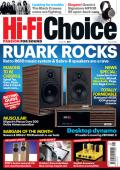 |
Inside this month's issue:
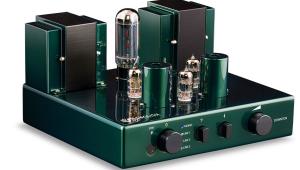
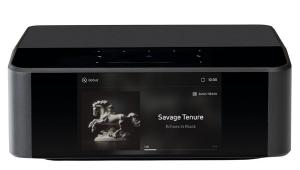
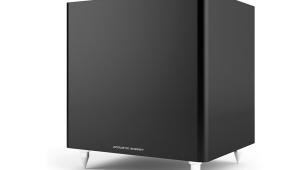
Ruark R610 music system and Sabre-R standmount speakers, PMC twenty.23i Active, floorstanders, English Acoustics Downton preamplifier, Bluesound NODE ICON preamp/streamer, Ortofon Concorde Music Blue MM cartridge and much, much more
|







| Equipment Reviews | |
Features | |
Latest News Awards Newsletters | |
Resources | |
Subscriptions |
WHERE TECHNOLOGY BECOMES ENTERTAINMENT
 © 2026 Hi-Fi Choice
AVTech Media Ltd
All rights reserved