Bluesound NODE ICON
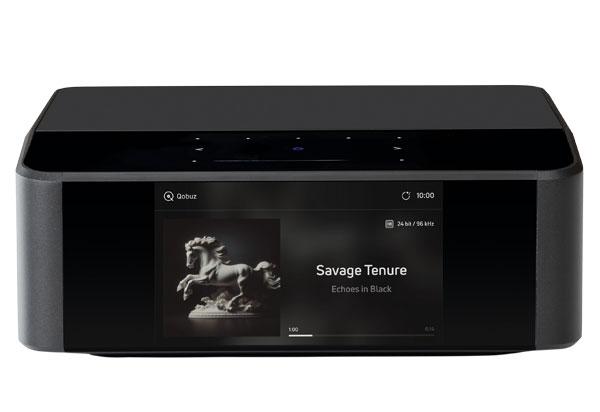
 As relationships go, the one between Bluesound and sister brand NAD – under the umbrella of the Lenbrook group – is a complex one. The Node family of devices has generally been aimed at the more affordable end of the market and everything in the inventory makes use of the BluOS operating system, which is particularly good for multi-room use. NAD is then free to make more classically ‘hi-fi’-type devices that, thanks to the same BluOS operating system can still join the family.
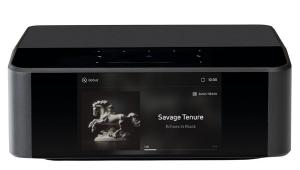
The newly arrived Node ICON sees the boundaries of that relationship tested somewhat. This is the largest and most sophisticated Node yet and, while it’ll still play happily in all Bluesound systems, it’s clear that the company has wider ambitions for it and that it is a repost to some of the very capable new streamers that are currently hitting the market. To this end, the ICON takes the BluOS platform with its excellent interface, comprehensive streaming service support and multi-room know-how and, for the first time, adds the ability to natively handle DSD to 256 (albeit with on-the-fly conversion to PCM). The hardware that does this is significantly beefed up. It is the first Node to be fitted with a balanced output and, thanks to it using a pair of ESS Sabre ES9039Q2M DACs, it is a true balanced device as well.
Aside from the streaming section, this decoding also makes use of optical, coaxial, HDMI eARC and a USB audio input via a USB C connection. Most unusually of all, the ICON also has an analogue input in the shape of a pair of RCAs. This might seem a touch of overkill for a streamer until you take into account that, as the ICON is a fully functional preamp, there is scope for it to be connected directly to a power amplifier or active speakers and operate on its own.
A subset of potential customers might not connect any other electronics at all. Like the limited-run Node X, the ICON gains a THX AAA-based headphone amp and there are two 6.35mm headphone sockets, one on either side of the casework to make use of it – which gives it significant potential as a headphone amplifier. If your cans of choice abandoned cables years ago, the ICON has two-way Bluetooth so it can also send a signal to wireless models.
The most interesting technical addition, however, is an optional extra. This is the inclusion of Dirac support, which was activated not long after the ICON went on sale. This allows for adjustment either of the lower frequencies only or a full 20Hz-20kHz tweak for $249. It’s worth pointing out that you are also likely to need a microphone, which naturally Bluesound will sell you. This gives the ICON potential to ‘dial-in’ to spaces that many other systems simply won’t.
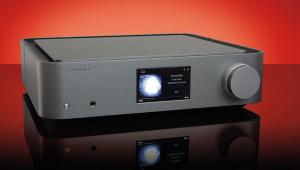
This is the first Bluesound product to have a full-colour display and to be built in a metal chassis. It’s beautifully assembled and finished, and gives the ICON a presence and credibility that the smaller Nodes don’t always have. The front display is not a touchscreen and there is a second illuminated touch panel above it that functions as a control point. This works well and allows for quick access to important functionality, but it’s arguably not quite as intuitive as the combination of display and jog dial that some other streamers employ – which can be a little more confidence inspiring, particularly where volume adjustment is concerned. It still feels very much worth the asking price, however.
Sound quality
This perception doesn’t change when you begin listening. Having completed the painless setup in well under 10 minutes, I start out using the ICON as a line-level device into a Naim Supernait 3 (HFC 456) and a pair of Focal Kanta No1 standmounts (HFC 454). There has been precious little amiss with lesser Nodes I have tested in recent times, but this is a step forward again. Listening to the potent and hard-hitting Nox Anima by Scratch Massive, the ICON combines an effortlessly spacious soundstage with genuinely decent bass. There isn’t ‘more’ bass than is the case with other well-engineered digital sources, but there is a level of definition and depth that really helps to convey the scale of the material. It’s visceral but usefully fast and agile at the same time.
In some senses, this traditional way of using the ICON is perhaps the least impressive of its skills. I switch the Naim out and substitute a Chord Electronics TToby (HFC 423) power amp, allowing the Bluesound to operate as a preamp running via the balanced outputs into the Chord. It doesn’t take very much of Ali Farke Touré and Ry Cooder’s Talking Timbuktu to establish that the ICON is an excellent preamp. Like most digital devices, it’s exceptionally linear in operation and there is fine adjustment enough to ensure you get the volume level you want. With the Naim out of the system, the presentation is slightly less urgent, but possesses a greater level of tonal sweetness at the same time that really helps the guitar and vocal sections of this album.
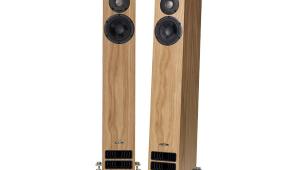
The presence of a pair of PMC twenty5.23i Actives (see p56) allows the system box count to be whittled down even further by running a long XLR cable to each speaker, and the Bluesound is a no less capable preamp used in this configuration as it is with a power amp. This is a leaner and slightly brighter presentation than before, but the same effortless three-dimensionality and impact is still very much evident.
I also use the PMCs as the test subject to run Dirac. This remains an entirely straightforward process that simply requires a microphone to be set in a selection of locations while a selection of measurements are taken, from which Dirac makes a series of corrections based on room response. The process takes around 15 minutes and tightens up the bottom end of the PMCs for a sound that positively encourages nudging the volume up.
What makes this so impressive is that streaming is only part of the mix. Connecting a TV via the HDMI ARC is painless and sees the ICON have its volume controlled by the TV remote. The same spacious and tonally convincing presentation is just as beneficial for TV viewing as it is for music and it makes a very effective partnership indeed. The headphone amp is also superb, extracting a level of performance from Focal’s Clear MG headphones that rivals significantly more expensive headphone amps. Against this, the performance of a Rega Planar 10 via Cyrus Classic PHONO (HFC 477 and 520 respectively) into the analogue input has to be content with simply being pretty good. If vinyl is a significant part of your listening, there may be mileage in retaining the services of an analogue preamp – although the ICON is more than good enough for use on a less dedicated basis.
Conclusion
In fact, the Node ICON is more than good enough to be something of a headache for anyone attempting to sell a streamer under two grand. What it does very effectively is take everything the smaller Nodes do so brilliantly and adds a level of out-and-out performance that makes it a very serious bit of kit indeed. Bluesound is moving up in the world and, based on the performance on offer here, you wouldn’t want to bet against it. ES
DETAILS
Product: Bluesound NODE ICON
Type: Plug-and-play streaming preamp
FEATURES
● Supports up to 24-bit/192kHz and DSD256 sample rates
● AirPlay 2
● aptX HD Bluetooth
● Roon-ready
Read the full review in Issue 527
 | ||||

|
|
|||


















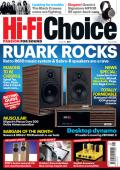 |
Inside this month's issue:
Ruark R610 music system and Sabre-R standmount speakers, PMC twenty.23i Active, floorstanders, English Acoustics Downton preamplifier, Bluesound NODE ICON preamp/streamer, Ortofon Concorde Music Blue MM cartridge and much, much more
|







| Equipment Reviews | |
Features | |
Latest News Awards Newsletters | |
Resources | |
Subscriptions |
WHERE TECHNOLOGY BECOMES ENTERTAINMENT
 © 2026 Hi-Fi Choice
AVTech Media Ltd
All rights reserved